Pages

Showing posts with label Makkah al-Mukarramah. Show all posts

Friday, September 16, 2011

Makkah Clock Tower

Makkah Clock Tower

Makkah Clock Tower

Makkah Clock Tower

Makkah Clock Tower

Thursday, September 15, 2011

Makkah Metro Train

The Al Mashaaer Al Mugaddassah Metro Line project in Makkah (Mecca) saw a 18.1km line constructed to connect the holy cities of Makkah (Mecca), Arafat, Muzdalifa and Mina. The line provides transport for about 3.5 million people who arrive at Makkah (Mecca) annually to perform Hajj. The number is expected to increase to five million in future. Construction of the monorail project has helped to solve the problem of heavy traffic congestion in the holy cities during the Hajj period and meet the transportation needs of the local people . Master plans drawn up by Mono Metro show that five monorails need to be constructed to handle the flow of pilgrims to the holy cities.

Makkah Metro Train

"The Makkah monorail project has been one of many undertaken by Saudi Arabia to expand its railway network."Based on the need to transport pilgrims from Mina to Arafat a four-line parallel loop network was developed. The line can transport about 500,000 pilgrims in six to eight hours. It has also allowed authorities to reduce the number of buses needed to transport pilgrims from 70,000 to 25,000.

Makkah Metro Train


The first phase of the project includes the four-line loop with a network of pick-up and drop-off stations between Mina and Arafat. The first of the five new metro lines started operating with Automatic Train Protection at 35% capacity by November 2010. By mid-2011, the line will run without a driver but with an attendant on board. The metro will reach full capacity to carry 72,000 passengers in each direction per hour by 2011's Hajj. About 8,000 skilled and unskilled workers, along with 5,000 engineers, were engaged in the project.

Makkah Metro Train Project

The line services Mina, Arafat and Muzdafila, each of which have three substations each. The four-line parallel loop network splits into single tracks covering all the encampment zones in Mina. Mina is the last station on the metro line and is located towards the west of the Jamarat Bridge. The metro line will be linked to all the four floors of the bridge with elevators.

The four-line parallel route moves south towards Arafat before reaching a main station next to the Arafat Mosque and splitting again into a single-line network to carry pilgrims into Arafat. The lines come together again and move towards Muzdelefa, where pilgrims can spend ceremonial time before returning to Mina.

The line runs on a viaduct with the depot located at the end of the trail that is behind the first station in Arafat. A turnaround loop is planned between the last station and the depot.

Makkah Metro Train

The future
Studies are being carried out to ascertain the extension of the monorail to a station close to the Grand Mosque in Makkah (Mecca) and linking it with Jeddah airport and the Haramain Railway that connects the two holy cities of Makkah (Mecca) and Madinah. Similar projects are planned for the city of Madinah in the future.

Monday, September 12, 2011

Learn Arabic before go for Umrah or Hajj (Makkah or Madina [Saudi Arabia])

Arabic is one of the most spoken languages in the world with over 200 million speakers. It is spoken in 24 countries and is the official language of all the countries of northern Africa, the Arabian peninsula, and in much of the Middle East, including Iraq, Syria, Lebanon, Kuwait, Bahrain and Saudi Arabia. As the religious language of Islam, it is also the second language of millions of Muslims around the world. It is one of the six official languages of the United Nations.

The Arabic language can be divided into three main categories:

Quranic (Classical Arabic):
This is the Arabic of Islam's holy book, the Quran (or Koran). It is archaic, which means that it is very old, dating from the late 600's when the Quran was written down. It is used in the Quran and in the holy books of Islam. No one speaks Classical Arabic as a native, nor is it used for conversation. It is learned primarily for reciting and reading the Quran.

Formal or Modern Standard Arabic:
This is an updated version of Classical Arabic which is taught in the schools of Arab countries. It is the language of the news, modern literature and education. No one speaks it as a native language but it is used as a common language for people who speak very different varieties of Arabic or by second-language speakers.

Spoken or Colloquial Arabic:
There are many local varieties of Arabic, many languages in their own right. The most widely spoken and understood of these is Egyptian Arabic. Other distinct varieties are Iraqi, Levantine (Lebanese/Syrian/Jordanian/Palestinian) and Moroccan Arabic.

Some common Arabic phrases are presented here for your information

Friday, August 5, 2011

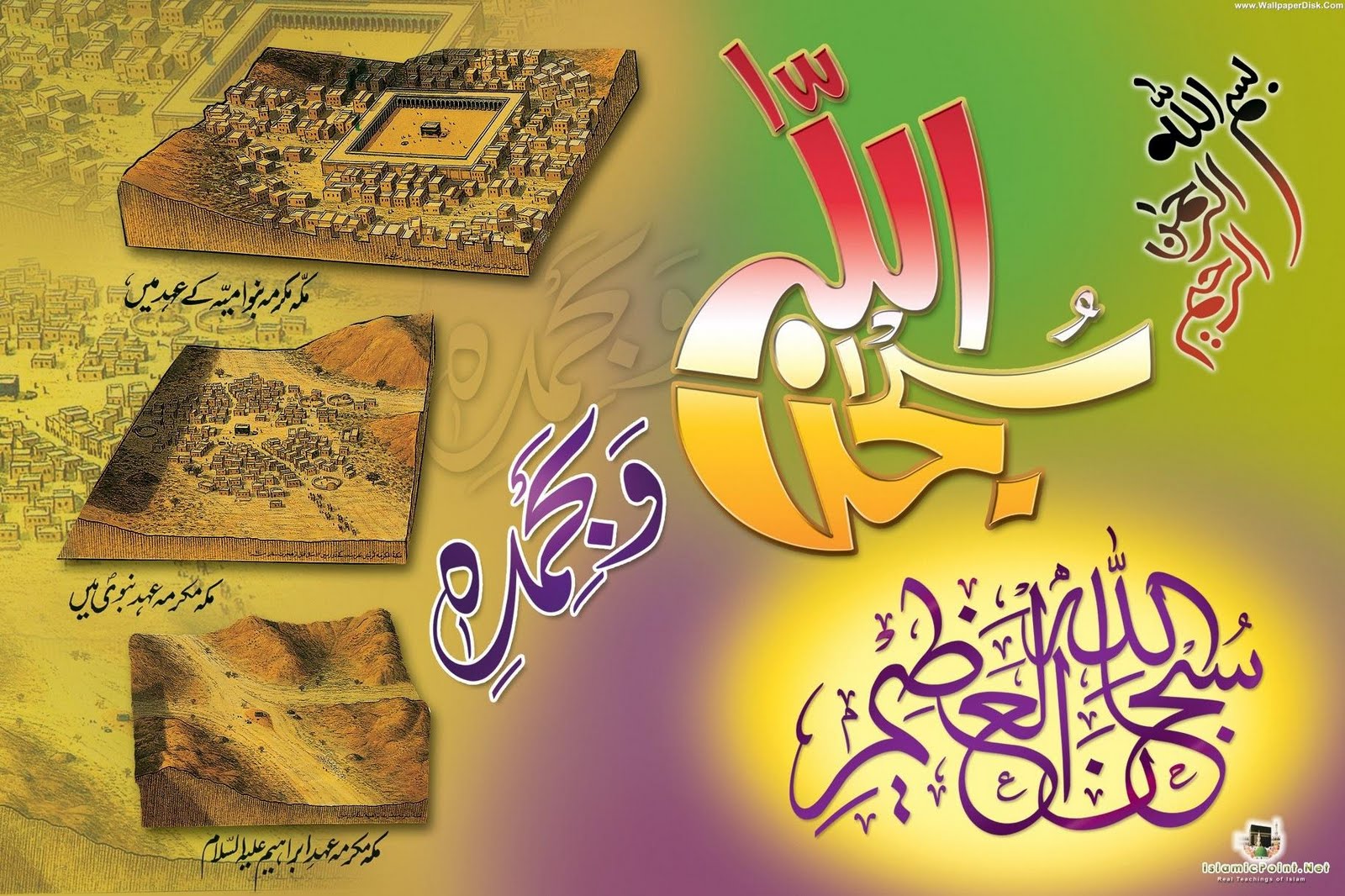
Stages of Makkah’s Development

Makkah at time of Prophet Hadrat Ibrahim AS (Hazrat Ibrahim)

Makkah at time of Prophet Hadrat Muhammad PBUH (Hazrat Muhammad SAWW)

Makkah at time of Banu Umaya

Tuesday, July 12, 2011

Slaughterhouses in the Holy City of Makkah

Slaughterhouse

Total area
Completion
Contract
Objective
Municipality Slaughterhouse
Kakiyah near old vegetables & fruits market
Approx. 50.000 sq. m.

The slaughterhouse was completed on 17/10/1399 H
Currently being invested until 25/07/1427 H, as per contract No.20 between the Municipality and Alwi Tunsi & Bros. Establishment
Provide edible slaughtered meat to butcher shops and meat markets in the Holy City of Makkah
Automatic Makkah Slaughterhouse
Kakiyah near sheep farms
Approx. 6.000 sq. m.

The temporary slaughterhouse was completed on 04/08/1409 H until the new slaughterhouse was completed on 02/01/1416 H
Currently being invested for 20 years starting from 02/01/1416 H as per contract No. 11 dated 04/08/1406 H between the Municipality and the Al-Sonblah Co. for Maintenance & Operation Ltd.
Provide services to citizens, residents, and Makkah visitors
Al-Aseelah Slaughterhouse
Al-Aseelah, Alshrayeh
Approx. 152.000 sq. m.
It was set up in 1407 H and started work in 1409 H. it was re-opened in 1417 H by Khalid Ashitri and started work on 1/11/1417 H
Private investment by Salem Mohammad Alqahtani Establishment
Provide services to citizens, residents, and Makkah visitors
Heda Slaughterhouse
Heda, Makkah-Jeddah Old Highway
Approx. 531 sq. m.

It started work on 18/07/1410 H; the owner is Sami Kareem Almawal
Not invested (the land is owned by the owner, a Saudi citizen)
Provide services to citizens, residents, and butcher shops in two regions, Heda and Bahra.
Alwadi Slaughterhouse
Al-Jamoum Province
Approx. 2740 m

It was completed on 21/03/1412 H and started work on 02/12/1413 H.
Currently invested for 20 years from 21/03/1412 H as per contract between the Municipality and Alwi Tunsi & Bros. Co.
Provide services to citizens, residents, and butcher shops in Al-Jamoum District and Al-Nawariyah District


This e-mail communication and any attachments thereto contain information which is confidential and are intended only for the use of the individuals or entities named above. If you are not the intended recipient, you are hereby notified that any disclosure, copying, distribution or taking any action in reliance on the contents of these documents is strictly prohibited and may be illegal. Please notify us of your receipt of this e-mail in error and delete the e-mail and any copies of it.

Friday, July 8, 2011

Kaa'kia Livestock (Cattle, Animal) Market, Makkah (Mecca, Haram), Kingdom of Saudi Arabia (KSA)

Livestock in Makkah Kingdom of Saudi Arabia (KSA)
Kaa'kia Livestock (Cattle, Animal) Market, Makkah (Mecca, Haram)
مكة المكرمة الثروة الحيوانية (الأبقار، الحيوان) سوق
سعودی عرب مکہ جانوروں کی افزائش مارکیٹ (مویشی، جانوروں)
السعودية جزيره العرب الثروة الحيوانية مكة المكرمة السوق (ماشية، الحيوان)
Saudi arabia Makkah Livestock Market (Cattle, Animal)
Arabie Saoudite Mecque du marché des bestiaux (bovins, animaux)
Saudi-Arabien Mekka Livestock Market (Rinder, Tier)
 
Every year during the Hajj season millions of Muslims from all over the world conduct the Hajj pilgrimage, the fifth pillar of Islam, at the holy city of Makkah (Mecca). One of the obligatory ritual in completing the Hajj is that those who could afford should sacrifice an animal like goat, cattle or even camel. Moreover If at the time of performing the Umrah or Hajj in case of any mistake the pilgrims must pay the penalty (dam) by sacrificing an animal.

In fulfilling this obligation pilgrims will normally take to several livestock market at the fringes of the sacred city to look for the sacrificial animal. One of them is the Kaa'Kia Livestock Market that offers small animals like goat to big ones like camel. The pilgrims can see for themselves and choose the animal of their choice whether it''s for plenty (dam) or Eid-ul-Adha.

Kaa'Kia (Kakia, Kakiah, Kakian, Kakya, Kakiya, Kakiyan) Livestock Market Located 20 minutes drive from the heart of Makkah (Mecca), the market covering 500 square meters could accommodate hundreds of goat, sheep, cattle and camel. In Kaa'kia Market the business is owned by Saudi citizens but managed by foreigners from various countries.

As soon as the pilgrims will be there for purchase of animal, Sellers, Workers & Slaughters  of Kaa'kia Market will immediately approaches who offered their animals for sale. After buying, the animals must be slaughtered and this is no problem here as the slaughterers donning red uniform are ready with their sharpened knives and skills.

The general observation here is that the animals (Goats, Sheep's, cattle's & camels) in Kaa'Kia Livestock Market are tame (domestic). The goat were not locked up in enclosures but were kept in groups.The animals are brought from various places, fed with grass and water within the pens or where they are held in groups in the market.

In Kaa'kia Market (Kaakiah, Kaakian, Kaakya, Kaakiya, Kaakiyan), the price of the animals are depend upon the size and type. Goat's are priced between SR 200 & SR 800;  Camel's are priced between SR 3,000 & SR 4,000; Cattle's priced from SR 2,000 to SR 3,000.

Wednesday, July 6, 2011

Limits of Haram (Hadood-e-Haram)

Limits of Haram (Hadood-e-Haram)

Limits of Haram (Hadood-e-Haram) + Meeqat


Jabal-e-Soar Cave

Jabal-e-Soar Cave

Jabal-e-Soar Cave

Jabal-e-Hira Cave (Jabal-e-Noor)

Jabal-e-Hira Cave (Jabal-e-Noor)

Jabal-e-Hira Cave (Jabal-e-Noor)

Jabal-e-Hira Cave (Jabal-e-Noor)

Jabal-e-Hira Cave (Jabal-e-Noor)

Jabal-e-Hira Cave (Jabal-e-Noor)

Birth Place of Prophet Muhammad (PBUH) Moolid-un-Nabi (SAW)

Birth Place of Prophet Muhammad (PBUH) Moolid-un-Nabi (SAW)

Birth Place of Prophet Muhammad (PBUH) Moolid-un-Nabi (SAW)

Birth Place of Prophet Muhammad (PBUH) Moolid-un-Nabi (SAW)

Birth Place of Prophet Muhammad (PBUH) Moolid-un-Nabi (SAW)

Birth Place of Prophet Muhammad (PBUH) Moolid-un-Nabi (SAW)

Birth Place of Prophet Muhammad (PBUH) Moolid-un-Nabi (SAW)

Birth Place of Prophet Muhammad (PBUH) Moolid-un-Nabi (SAW)

Birth Place of Prophet Muhammad (PBUH) Moolid-un-Nabi (SAW)

Masjid-e-Nimra Mosque

Masjid-e-Nimra Mosque

Masjid-e-Nimra Mosque

Masjid-e-Aisha (Ayesha Mosque)

Masjid-e-Aisha (Ayesha Mosque)

Masjid-e-Aisha (Ayesha Mosque)

Hadood-a-Haram Masjid-e-Aisha (Ayesha Mosque)

Masjid-e-Aisha (Ayesha Mosque) - Inside View

Masjid-e-Aisha (Ayesha Mosque) - Inside View

Friday, June 10, 2011

Area Statistics of Makkah City and Ritual Sites

Area of Makkah Region (Al-Jamoum, Bahra, Ashuaiba) = 14.500 sq. km. (Makkah City)

Area of Religious Sites = 550 sq. km. (Makkah City)

Area of Central Region = 6 sq. km. (Makkah City)

Populated Area = 88 sq. km. (Makkah City)

Population in 1425 H (2004) = 1,300,000 persons (Makkah City)

Number of Makkah Districts  = 60 Districts  (Makkah City)

Height of Al-Thour Mountain = 750 m. (Makkah City)

Height of Hera Mountain = 630 m. (Makkah City)

Attitude = 277 m. (Makkah City)

Area of the Mosque = 100,000 sq. m. (The Holy Mosque of Makkah)

Area of Squares inside the Mosque = 135,000 sq. m. (The Holy Mosque of Makkah)

Area of Ritual Sites = 33 sq. km. (Ritual Sites)

Area of Mina Site = 8 sq. km. (Ritual Sites)

Area of Muzdalefah = 12 sq. km. (Ritual Sites)

Area of Arafat = 13 sq. km. (Ritual Sites)

Roads Length = 2032.000 km (Roads & Tunnels)

Number of Tunnels = 26 km (Roads & Tunnels)

Number of Approved Residential Areas = 322 residential areas (Residential Areas)

Number of Residential Blocks = 201716 (Residential Areas)

Number of Areas for Repair Shops and Warehouses = 20 areas (Residential Areas)

Number of Blocks for Repair Shops and Warehouses = 7802 blocks (Residential Areas)

Thursday, June 2, 2011

Makkah Madina Emergency Telephone Numbers

Emergency Telephone Numbers
Makkah and Madina
Kingdom of Saudi Arabia (KSA)
~ ~ ~
POLICE
999
~ ~ ~
FIRE
998
~ ~ ~
 
AMBULANCE
997
~ ~ ~

HIGHWAY POLICE
996
~ ~ ~

ACCIDENTS
993
~ ~ ~

Wednesday, May 25, 2011

Major Hotels in Holy City of Makkah al-Mukarramah


~~~

Hilton Hotel

Tel: +966 2 5340000

~~~

Manazel Al Ain Mercure

Tel: +966 2 5578000

~~~

Al Marwa Rayhaan by Rotana

Tel: +966 2 5714444

~~~

Intercontinental DAR AL TAWHID

Tel: 0800 9097100

Friday, May 20, 2011

The Holy Kaaba Architecture and Organization (Kabah)

The Holy Kaaba
The Quran-a-Majeed refers to Makkah al-Mukarramah, and the Holy Mosque (Masjid al-Haram) Accordingly, Hazrat Ibrahim A.S and his son Hazrat Ismail A.S built the Holy Kaaba. Later through the decades the Holy Kaaba was rebuilt various times through history but always by maintaining the original stonework and dimensions.


Tawaf-a-Kaaba (Kabah)


The Holy Kaaba has a great role in Islam, being the vocal point of all prayers (Namaz, Salat) as well as a destination for worship and devotion.


The Size of the Holy Kaaba:

The current height of the Holy Kaaba is 39 feet, 6 inches and total size comes to 627 square feet.

The inside room of the Holy Kaaba is 13x9 meters. The Holy Kaaba's walls are one meter wide. The floor inside is 2.2 meters higher than the place where people perform Tawaaf.

The ceiling and roof are two levels made out of wood. They were reconstructed with teak which is capped with stainless steel.

The walls are all made of stone. The stones inside are unpolished, while the ones outside are polished.

This small building has been constructed and reconstructed by Prophets Adam, Ibrahim, Ismail and Prophet Muhammad (peace be upon them all). No other building has had this honor.


Kaaba Floor Plan (Kabah)

Prayer of Prophet Ibrahim at time of Construction of Holy Kaaba

Prayer of Prophet Ibrahim at time of Construction of Holy Kaaba

Tameer a Kaba k waqat Hazrat Ibrahim A.S ki Dua


Tuesday, May 17, 2011

Zamzam The Holy Water

Historically Hazrat Ibrahim Alaihis Salam was ordered to leave his wife Hazrat Hajirah Alaihis Salam and child Hazrat Ishmael Alaihis Salam in a valley without any vegetation or water at the site of his sacred house before the building of the Kabah promising to provide for them. As Hazrat Ishmael Alaihis Salam cried in thirst Hadhrath-e-Hazrat Hajirah Alaihis Salam ran from a small rise to another (safa and marwah) in the hope that a mirage of water was real. Allah then broke forth a spring at the feet of the crying baby now know as the well of Zamzam (The Holy Water).